 ADMIN ST BUSINESS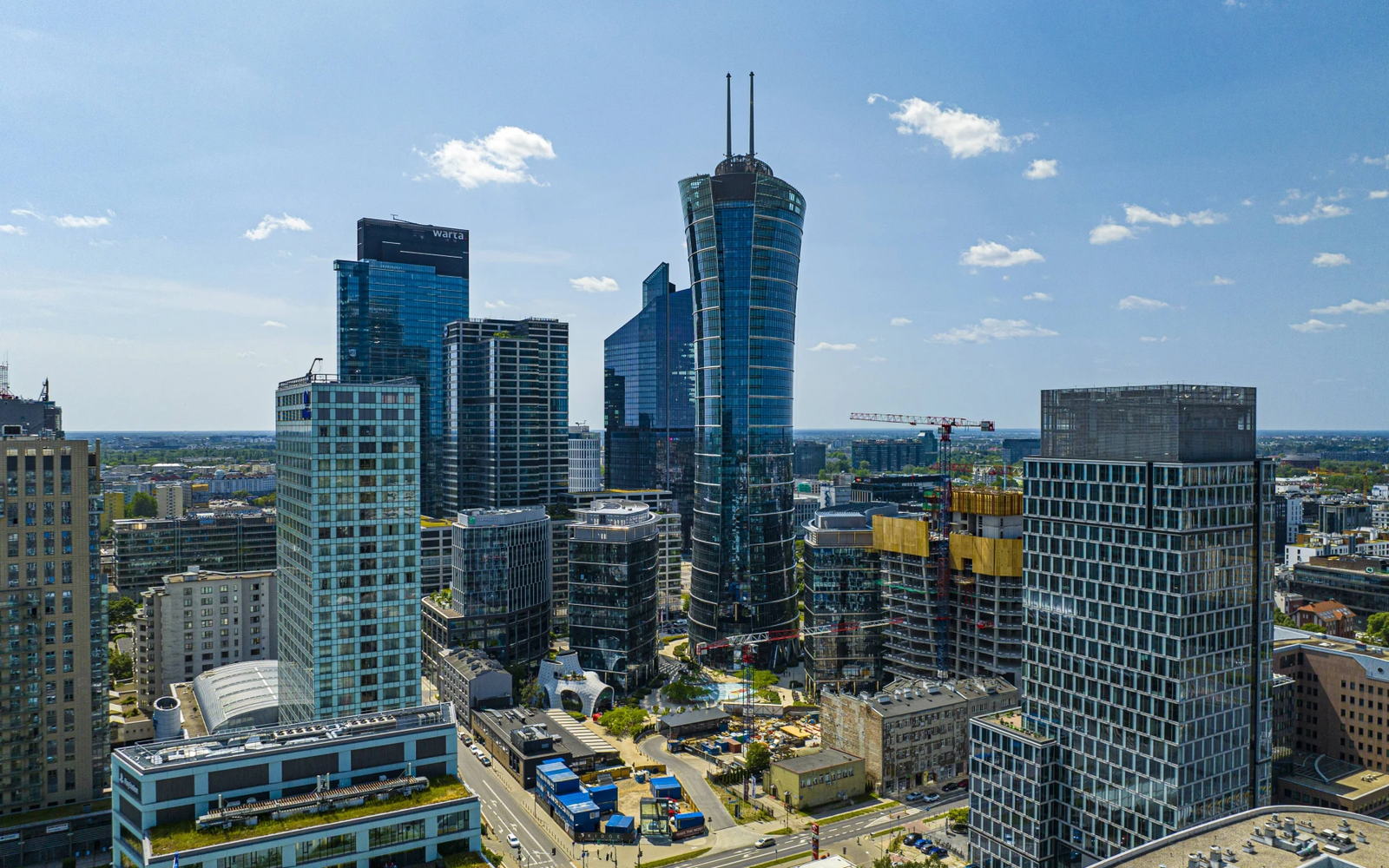
Warsaw has firmly established itself as the dominant business hub in Central and Eastern Europe. For international companies evaluating locations for regional headquarters, shared service centers or technology operations, the Polish capital offers a combination of factors that few European cities outside the top tier can match – a large, highly educated workforce, competitive operating costs relative to Western Europe, full EU membership and a track record of economic resilience through multiple cycles of global uncertainty.
What makes Warsaw attractive for international tenants?
Poland’s economic fundamentals are among the strongest in the European Union. The country maintained positive GDP growth through the 2008 financial crisis and adapted rapidly to pandemic-related disruptions. For companies making location decisions with a ten to fifteen year horizon, this stability matters as much as current cost levels.
The talent pool available in Warsaw is one of the city’s most compelling advantages. Poland produces hundreds of thousands of university graduates annually across technical, business and language disciplines. English proficiency among young urban professionals is among the highest in CEE, and additional language skills – German, French, Spanish and others – are common, making Warsaw a natural fit for European regional operations requiring multilingual teams.
Warsaw’s infrastructure has developed considerably over the past two decades. International flight connections from Chopin Airport cover most major European business destinations with multiple daily frequencies. The city’s road and public transport network allows for reasonable commute times from residential areas across a wide radius.
How does Warsaw’s office market compare to other CEE capitals?
Warsaw’s total modern office stock exceeds six million square meters, making it by far the largest office market in the CEE region and one of the top ten in Europe by volume. This scale has practical implications for international tenants – companies of almost any size can find suitable space, and the depth of the market means that transactions of any scale, from a few hundred to tens of thousands of square meters, can be accommodated without distorting the market.
Prime rents in Warsaw remain significantly below those in comparable Western European capitals, while the quality of available space – particularly in buildings developed over the last decade – matches or exceeds what is available at equivalent prices elsewhere. For cost-conscious location decisions, this gap remains relevant even as Warsaw rents have moved upward over the past decade.
Office for rent in Warsaw within established portfolios managed by experienced operators typically offers international tenants the full range of services – English-language support throughout the leasing process, established procedures for international entity registration requirements and familiarity with the specific needs of companies establishing new operations in Poland.
Which districts offer the best options for international companies?
Warsaw’s office geography is organized around several distinct business zones, each with its own character and tenant profile. The new business district around Rondo Daszyńskiego in the Wola district hosts some of the city’s most modern and technically advanced buildings, attracting global corporations seeking premium space with excellent Metro M2 connectivity. The traditional Central Business District in Śródmieście offers prestige addresses and proximity to major institutions, law firms and financial sector tenants. Mokotów provides an established, infrastructure-rich environment that has housed international corporations for decades.
What should international companies know about Polish leasing practice?
Commercial leases in Poland are typically denominated in euros, providing a degree of currency stability for companies operating primarily in euros. Polish lease documentation follows broadly European standards, though certain local specifics – including VAT treatment of commercial rent and the structure of service charge reconciliations – benefit from local legal advice when finalizing terms.
CPIPG manages a portfolio of office buildings across Warsaw and offers English-language support for international tenants throughout the leasing and occupancy process, providing continuity of service for companies whose internal communications operate primarily in English.