
 State Business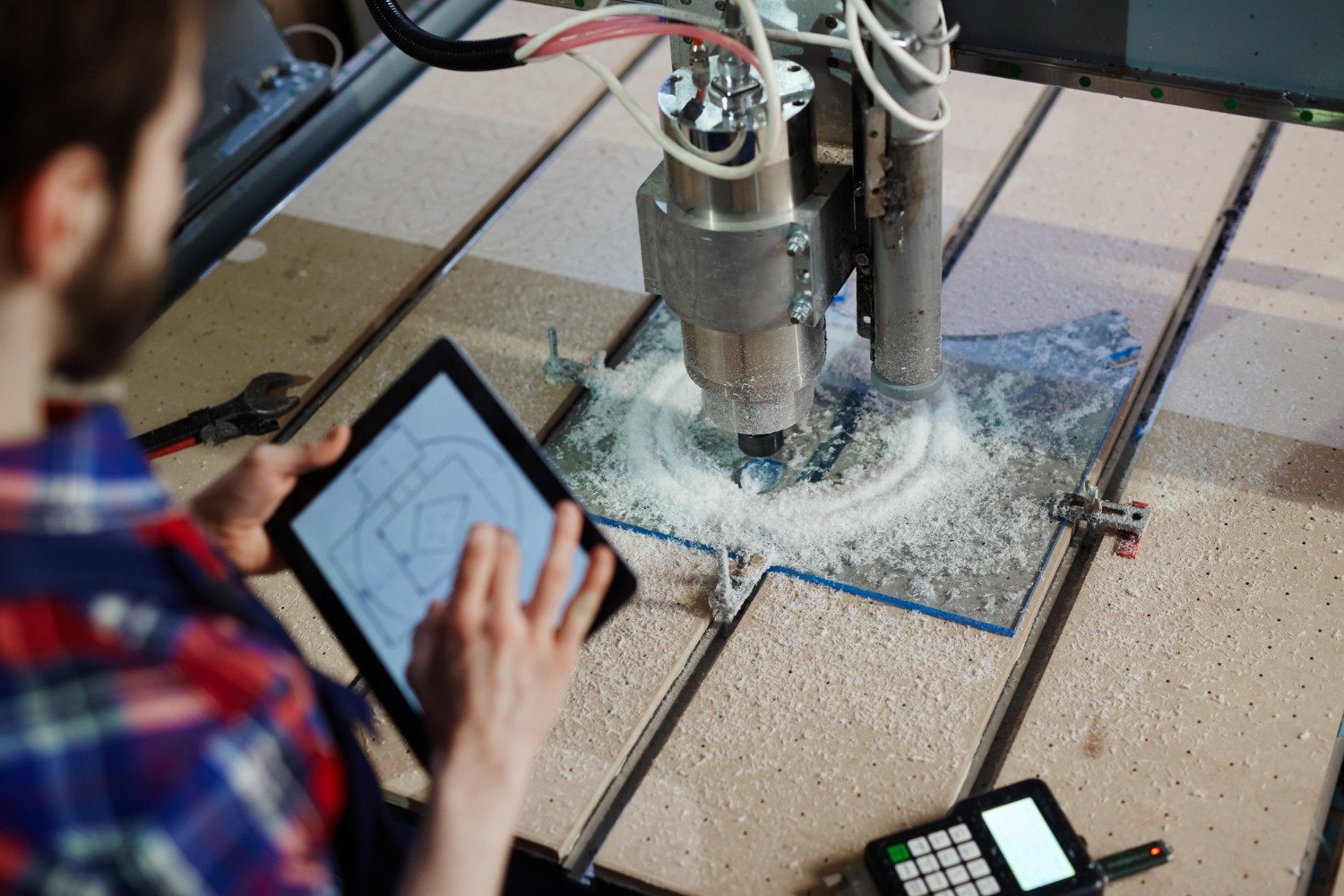
The UK manufacturing sector is experiencing a structural shift. Rising expectations around quality, supply chain resilience, sustainability, and lead-time compression are forcing businesses to rethink how they design and produce components. In this evolving landscape, precision machining and agile manufacturing models have become central to maintaining industrial competitiveness.
From aerospace and automotive to medical engineering and renewable energy systems, modern industries demand components that meet tight tolerances, consistent repeatability, and increasingly complex geometries. The companies that succeed are those that combine engineering expertise with advanced machining technologies and smart production planning.
Precision Machining: The Foundation of Industrial Reliability
Precision machining refers to controlled material removal processes that create parts with highly accurate dimensions and surface finishes. Unlike conventional fabrication methods, modern machining integrates CAD/CAM systems, digital toolpath simulation, and computer-controlled cutting tools to achieve consistent and repeatable results.
This level of precision is not optional in today’s manufacturing environment. A deviation measured in microns can affect performance in high-speed assemblies, hydraulic systems, or medical applications. As a result, manufacturers increasingly rely on advanced CNC platforms capable of holding stable tolerances across large production batches.
High-performance machining environments — particularly those equipped with multi-axis CNC systems — allow for the efficient production of intricate geometries while reducing secondary operations. Facilities specialising in advanced CNC turning and machining centre capabilities provide manufacturers with access to technical depth without the need for heavy internal capital investment.
Why CNC Turning Remains Critical in Modern Production
Among machining processes, CNC turning continues to play a vital role, especially for cylindrical and rotational components such as shafts, bushings, fasteners, connectors, and precision fittings.
Modern turning centres can integrate live tooling, sub-spindles, and automated bar feeders, allowing for multi-operation machining within a single setup. This significantly reduces production time, enhances concentricity control, and minimizes cumulative tolerance stack-up.
For companies seeking to upgrade component reliability or scale production efficiently, working with specialists in high-accuracy turning operations can be a strategic decision. Access to a facility equipped with advanced multi-axis CNC turning systems not only improves dimensional consistency but also strengthens overall supply chain stability.
Businesses that collaborate with providers experienced in advanced CNC turning centre capabilities often gain a competitive edge through improved machining repeatability, optimized cycle times, and better process control.
The Strategic Role of Turned Parts Manufacturing
As product designs grow more complex, many OEMs and engineering firms are shifting toward specialist suppliers for precision turned components. This approach reduces operational risk and allows internal teams to focus on R&D, assembly, and system integration.
Precision turned components are widely used in industries that demand high structural integrity and smooth surface finishes. Achieving consistent quality at scale requires not only advanced machinery but also process engineering expertise, tool selection optimization, and rigorous inspection protocols.
Partnering with an experienced precision turned parts manufacturing facility can help companies maintain stable production volumes while meeting strict quality standards. Such collaborations are particularly valuable when scaling new product lines or entering regulated sectors where compliance and traceability are essential.
Outsourcing strategically to specialised factories also improves flexibility. Instead of committing to heavy fixed investments, manufacturers can adapt output levels according to market demand, preserving cash flow while maintaining high production standards.
Digital Integration and Smart Manufacturing Trends
Beyond mechanical accuracy, manufacturing is increasingly shaped by digital transformation. Industry 4.0 technologies — including real-time monitoring, predictive maintenance, and integrated production analytics — are redefining operational efficiency.
Smart machining systems now incorporate sensors that track spindle load, vibration, and tool wear. Data-driven adjustments reduce downtime and enhance tool life, directly impacting cost per part. When integrated with enterprise resource planning (ERP) platforms, production data improves forecasting accuracy and inventory management.
For UK manufacturers navigating global competition, digital connectivity provides visibility across supply chains. Transparency improves responsiveness and strengthens customer trust — two elements that are now just as important as price competitiveness.
Sustainability and Efficiency as Business Drivers
Sustainability is no longer simply a compliance issue; it has become a commercial differentiator. Precision machining contributes to sustainability goals by minimizing material waste through optimized toolpaths and reducing scrap rates through accurate first-pass production.
Energy-efficient machines, advanced coolant management systems, and material recycling programs are becoming standard in forward-thinking facilities. Companies that integrate environmentally conscious machining practices not only reduce operating costs but also strengthen their brand positioning within environmentally regulated markets.
Moreover, efficient machining shortens production cycles, lowers energy consumption per unit, and extends tool life — all contributing to lower total manufacturing costs.
Building Industrial Resilience Through Engineering Partnerships
Recent global supply chain disruptions have highlighted the importance of reliable manufacturing partnerships. Businesses that cultivate relationships with technically capable machining providers are better positioned to respond to demand fluctuations and logistical challenges.
A resilient supply network depends on technical transparency, stable quality systems, and consistent communication. Working with experienced machining specialists ensures that production continuity is maintained even during periods of volatility.
Strategic outsourcing of high-precision components enables manufacturers to reduce lead times while improving product consistency. Rather than viewing machining purely as a transactional process, progressive firms treat it as a collaborative engineering function.
The Competitive Outlook for UK Manufacturing
The future of UK manufacturing will be defined by quality, adaptability, and technological integration. Companies that leverage precision machining, advanced CNC turning, and specialist component manufacturing will continue to lead in high-value sectors.
By combining engineering knowledge with modern production technologies, manufacturers can achieve:
- Higher dimensional accuracy
- Reduced production risk
- Faster time-to-market
- Improved sustainability metrics
- Stronger global competitiveness
In an era where precision and agility determine market position, machining is no longer just a production step — it is a strategic asset. Businesses that recognize this shift and invest in capable partners and technologies will shape the next phase of industrial growth.