 State Business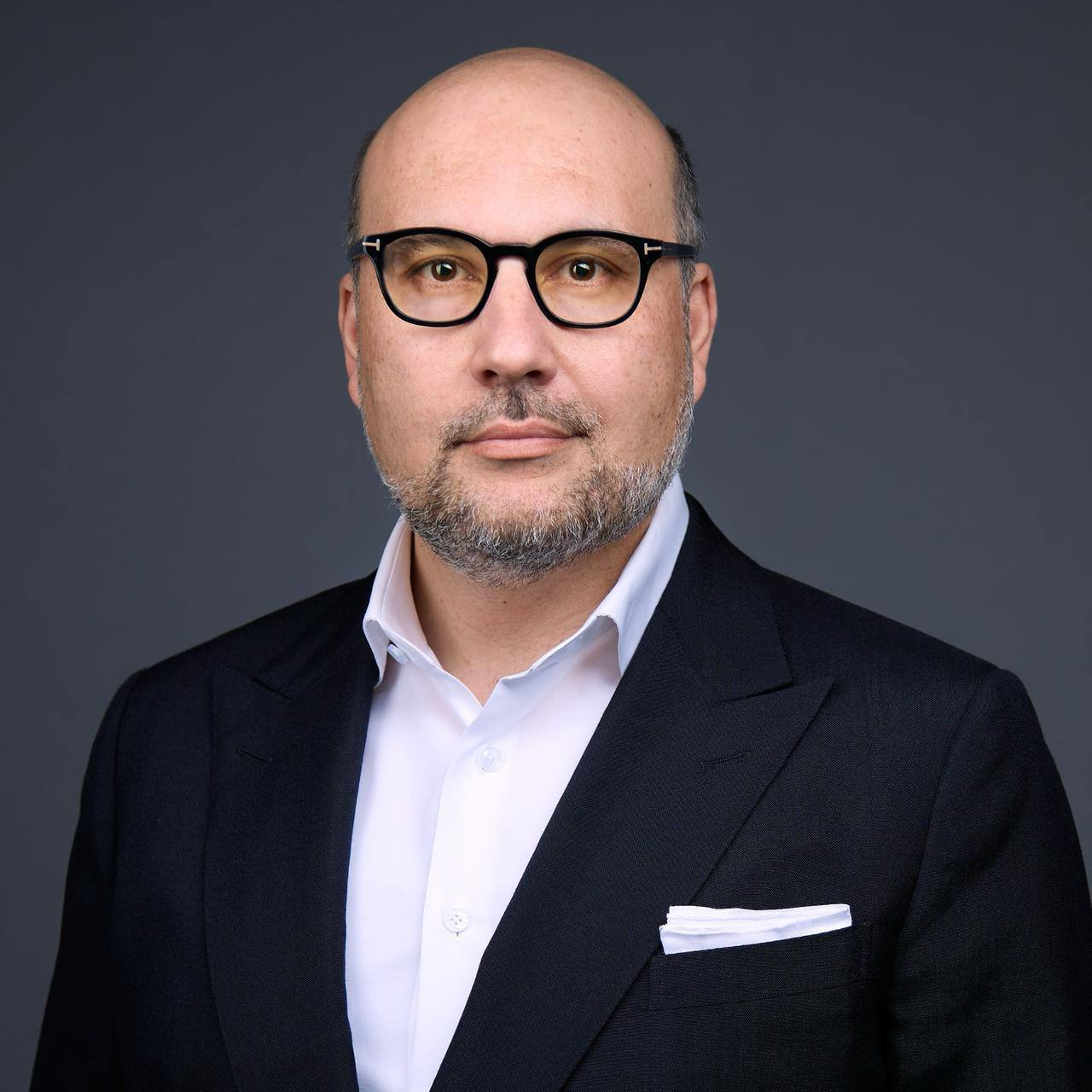
Setting the Scene
Context matters for an offering like BTECH’s. Following the 2022-2023 SPAC downturn—marked by poor governance and steep redemptions—the market has matured. By 2025, over 120 SPAC IPOs raised $22 billion, driven by experienced sponsors with clear mandates. By June 2026, 69 SPAC IPOs have already exceeded full-year 2025 issuance, with 352 active SPACs holding $55.6 billion in trust. BTECH’s S-1 filing on May 21, 2026, is surgically timed to meet this disciplined demand.
Institutional investors now prioritize governance credibility, sector specificity, and “AI adjacency.” Generic mandates are no longer investable; capital now seeks specialized teams capable of managing complex energy assets. BTECH passes these tests by bridging conventional hydrocarbons with the infrastructure needs of the AI economy.
What the Institutional Community Is Actually Looking For
BTECH’s board acts as an oversubscription catalyst, offering unique credentials to various institutional pools. Michal Krupinski, former CEO of Bank Pekao and PZU Group, provides immediate credibility for European investors. Michal served at the World Bank and led Global Banking at Merrill Lynch, making him a cornerstone for institutional trust.
Shaikh Ali Bin Sultan Bin Ali Alnuaimi, Non-Executive Chairman, connects BTECH to Gulf capital. His leadership at Alnoaimi Group and experience at Ajman Bank provide critical access to regional deal flow and regulatory networks. Simultaneously, Babatope Adedara brings African energy expertise from his decade at Dangote Industries and U.S. governance experience from PNC Financial Services.
The board is rounded out by Ralph Georges Tabet’s GCC finance expertise, Luisa Ingargiola’s extensive public market experience across multiple SPAC boards, and CEO Farbod Pasha Asgharzadeh’s infrastructure execution background. CFO James DeAngelis adds energy advisory and data analytics depth, ensuring a management team that is operationally and financially robust.
The third criterion, newer but increasingly important, is what might be called the AI adjacency test. Funds that have built significant positions in AI infrastructure — compute, power, data center development — are actively looking for energy exposure that connects to that theme without simply replicating the pure-play AI bets they already hold. A vehicle that can credibly bridge conventional hydrocarbon assets and AI power demand occupies a strategic position that is genuinely difficult to replicate through listed markets alone.
BTECH Corporation passes all three tests with an unusually wide margin. That is not a common observation to make about any SPAC, let alone one filing in an already crowded market.
The Board as an Oversubscription Catalyst
Market conditions favor BTECH. Energy has re-emerged as a strategic priority, driven by geopolitical shifts and AI power demand. SPACs offer a unique vehicle for funds to build energy exposure without immediate ESG reporting constraints. BTECH’s focus on natural gas as an AI fuel source aligns with current equity research and institutional conviction.
Michal Krupinski is the most immediately legible credential for European institutional investors — pension funds, sovereign wealth funds, and family offices across Central and Eastern Europe, Germany, and the Benelux that have dealt with Bank Pekao, the World Bank, or PZU Group in any capacity will recognize his name and the weight it carries. Krupinski served as CEO of Bank Pekao — Poland’s second-largest bank and its leading corporate and investment institution — from June 2017 to December 2019, having previously led PZU Group, the largest insurance and asset management company in Central and Eastern Europe. Before that, he ran Global Banking and Markets for CEE at Bank of America Merrill Lynch, served as Alternate Executive Director at the World Bank Group representing multiple Central and Eastern European and Central Asian countries, and at 25 became the youngest person ever appointed to a ministerial position in Poland, as Undersecretary of State at the Ministry of Treasury. His MBA is from Columbia University. This is not a resume that needs explaining to anyone who operates at the senior level of European institutional finance. It is a reference that opens doors.
Shaikh Ali Bin Sultan Bin Ali Alnuaimi, as Non-Executive Chairman, represents a different and equally important category of institutional relationship: the Gulf sovereign and quasi-sovereign capital that has been looking for credible vehicles to channel into oil and gas assets without the ESG constraints of Western regulated finance. Since 2012, Shaikh Ali has led the Alnoaimi Group as Managing Director, a UAE conglomerate spanning real estate, construction, transport, engineering, and hospitality. His four years as Government Relations Manager at Ajman Bank gave him direct operational familiarity with the regulatory and relationship landscape of UAE financial institutions. The significance here is not symbolic. In the Gulf, where deal flow access is a function of personal relationships accumulated over years rather than formal market processes, having a chairman who operates at this level is worth more to a deal team than any amount of financial modeling capacity.
The Market Conditions for Oversubscription
Board credentials are necessary but not sufficient to generate oversubscription. The market conditions also have to be right, and in mid-2026 they largely are.
Energy has re-established itself as the most strategically important sector in the institutional investment landscape. The geopolitical events of the past three years — the persistent instability in European gas supply chains, the acceleration of Gulf petrostate investment programs, the emergence of African upstream as a growth frontier, and above all the recognition that AI-scale power demand is inseparable from fossil fuel baseload generation — have collectively rehabilitated hydrocarbons as an institutional asset class in a way that few anticipated five years ago. Funds that spent 2020 and 2021 divesting energy exposure are quietly rebuilding it, often through vehicles and structures that do not require their ESG reporting frameworks to acknowledge the position directly.
SPACs, as it happens, are one of those structures. A unit position in a blank check company holding U.S. government securities in trust is not an energy investment for reporting purposes. It becomes one only upon business combination. For funds navigating the gap between their public ESG commitments and their genuine conviction that energy infrastructure will outperform over the next decade, that nuance is commercially significant.
The AI power demand narrative adds a layer of institutional demand that is entirely new to the energy SPAC category. Funds with significant technology and AI infrastructure exposure are looking for energy plays that connect to their existing theses. Natural gas as the fuel of the AI economy is a story that has been told in equity research, in infrastructure finance, and at every major energy conference in 2025 and 2026. BTECH’s explicit integration of that narrative into its acquisition mandate gives technology-oriented investors a reason to look at an energy SPAC they might otherwise have passed over.
D. Boral’s Distribution Machine
Underwriter D. Boral Capital brings a massive distribution engine, having raised $23 billion across 300 transactions. Their leadership in SPAC issuance, validated by Nasdaq and NYSE approvals, ensures BTECH reaches relevant energy and infrastructure funds. Mark Iorio and Jason Kolbert provide the ECM and research follow-through required to build and maintain an oversubscribed book.
Founded in 2020, D. Boral has accumulated more than $23 billion in aggregate capital raised across approximately 300 transactions. Its claim to the number one position in U.S. SPAC issuance from 2022 to 2024 is supported by a visible deal record: D. Boral ARC Acquisition I Corp. raised $250 million in July 2025, the second vehicle in that series filed for another $250 million shortly after, and in December 2025 the firm acted as co-lead bookrunner on New America Acquisition I Corp.’s $345 million NYSE listing with the overallotment exercised in full. The firm received Nasdaq Limited Underwriting Member approval in February 2025 and NYSE equivalent approval in September 2025 — institutional credentialing processes that validate its capacity to lead large-cap listings on both major exchanges.
The distribution infrastructure matters. D. Boral’s research platform, led by Head of Research Jason Kolbert with coverage across more than 70 companies spanning energy, technology and AI, industrials, and financial services, provides the analytical follow-through that institutional investors require before and after a listing. Head of ECM Mark Iorio has managed placement of more than 200 public and private offerings with career-total involvement in approximately $20 billion of capital raises. This is a firm that has built the machinery to run a large book-building process, maintain investor relationships through the pendency period, and support the aftermarket. For BTECH’s purposes, D. Boral’s reach into the specific institutional categories — energy funds, AI-adjacent infrastructure funds, GCC sovereign vehicles, European family offices with CEE exposure — that are most likely to be active in this book is a structural advantage that a smaller or less sector-experienced underwriter could not replicate.
The Mechanics of an Oversubscribed Book
When an offering like BTECH attracts demand that significantly exceeds the stated size, several things happen in sequence, and it is worth understanding them.
The first is that the overallotment option — the right to sell up to 3 million additional units at the same price, taking gross proceeds from $200 million to $230 million — gets exercised in full within days of listing. This is almost certain in an oversubscribed book, and it is the most immediate signal to the market that institutional demand has been strong. For the company, it means additional capital in trust. For investors, it means slightly better secondary market liquidity. For the press coverage that follows a listing, it is the clearest available metric of deal quality.
The third effect, less immediately visible but arguably more important, is on the deal pipeline. Management teams at potential acquisition targets watch SPAC listings carefully. A vehicle that lists strongly, exercises its overallotment, and trades at a premium arrives at the negotiating table with a different posture than one that struggled through its IPO. The implicit message is: this team has capital, has institutional backing, and is a credible buyer. For the kind of complex, cross-border energy acquisitions that BTECH is targeting — privatized former state assets, development-stage refineries, midstream infrastructure in growth markets — the perception of financial strength and institutional legitimacy can be the difference between getting to due diligence and being politely declined.
The oversubscription narrative, if it materializes, is not just about the IPO. It is about what the IPO makes possible in the deal process that follows.
What Could Constrain Demand
Intellectual honesty requires acknowledging the factors that could limit demand even for a well-constructed vehicle. The SPAC market in 2026, while revived, remains sensitive to macro conditions in a way that traditional IPOs are not. A significant risk-off event — a credit market dislocation, a geopolitical shock, a sharp move in energy prices — can quickly drain demand from even the most carefully constructed book. The 18-month completion window creates its own uncertainty: institutional investors are betting on a management team’s ability to find and close a deal, not on the merits of an operating business, and that requires a level of trust that not every investment committee is prepared to extend.
The Larger Argument
Ultimately, BTECH is more than a $200 million raise; it is a specialized instrument designed for the modern energy infrastructure market. By aligning a credible team with real global needs, BTECH stands at the intersection of a rare market opportunity.
The format — a Cayman Islands SPAC listed on Nasdaq, managed by a sponsor with UAE and U.S. capital markets relationships, underwritten by the most active SPAC bookrunner in recent memory — is the instrument that happens to be available for this purpose at this moment. The underlying need it serves is not a product of 2026. It will still be present in 2030 and beyond.